Monday, 22 November 2010

Too far? Wayne McGregor, Random Dance


Wayne McGregor - the most celebrated choreographer working in the world today - could be running out of ideas. In his new work, Far, which premiered last Wednesday at Sadler's Wells - his supremely talented Random Dance performers contorted their lithe bodies into the choreographic maestro's usual eye-watering, asymetrical shapes. Narrative-free, abstract and compelling, the man's aesthetic is to deconstruct the pleasing lines we associate with ballet to uncover what lies beneath. The answer - compelling oddity. Afterall, whatever these dancers do to their bodies as they are young, supremely talented and hot. Ugliness isn't part of their DNA.

Far is presented on a bare stage apart from a large white rectangular light installation by Lucy Carter for rAndom International.The piece's pinned lights sweep, high-light and scintillate from crazed disco effect what looked like running water. It is brilliant and mesmerizing. And it is also distracting. I found myself watching its lucid pyrotechnics more than I was the dancers in the foreground. This might be forgiveable in an art gallery where this work could be seen as an art piece rather than a dance performance. McGregor's collaborations are fascinating, he's worked with Juilan Opie, Joby Talbot and the White Stripes in past productions, especially 2006's Chroma - his most popular and greatest work to date.

With this piece, McGregor takes his inspiration from Roy Porter's posthumous book, Flesh In the Age of Reason on which the work draws it's name (an acronym) and inspiration. But who can tell?

Wednesday, 10 November 2010

Time Lord, Marclay's The Clock, White Cube Mason's Yard till November 13th


Video artist Christian Marclay's 'The Clock' is the most original timepiece in the world because it's a film. A film that tells you the time by using every kind of movie that's ever had a shot of a clock, a character glancing at their watch or a bank robber muttering something like, 'It's now 2.29, the bomb will explode in 31 minutes!'.

The film runs for twenty-four hours - a mash up of black and white, Hollywood blockbuster, foreign language, schlock, glitz, tack (indeed, that is Jack Nicholson singing, ''It's three twenty five" to a glitter-eyed babe), art house, adventure, western, rom com, musical and drama.

The only narrative thread, is time, everything else is back story. The film's characters are telling, seeing, ignoring or responding to time as it happens. Yet these moments are fictions from source material that span over 80 years of film product. It's a dizzying concept made real via thousands of hours research on a spaghetti mountain of footage. For who can remember a great panning shot that features a clock from any film? Let alone the precise moment it happened.

It's tempting to say something clever about how 'The Clock' explores the fragmentation of time by deconstructing time's logic and rationality. I could even give it a psychoanalytic spin and see this work as a carnivalesque subversion of tyrannical super-ego 'father' time. A cocked-up clock, perhaps.

But what struck me most was the enormous pleasure this piece gives its audience. Just hear those gasps of pleasure at each audacious moment of time-revealing footage!

So remove your watch, sit back, and enjoy the ride of your life.

Tuesday, 2 November 2010

Two operas and a dance off - Gluck, Monteverdi and Pina Bausch 28/29th October 2010


The development of opera in its first 150 years was a refinement of the melodic line and the bringing together of evermore complex vocal groups before the shuddering emotional onslaught of the Romantics at the end of the 18th Century. The same thing happened to pop when rock 'n roll first charged the solar plexus. To compare opera's first great master, Monteverdi (17th C) with Gluck (18th C) over a hundred years later is to consider two ends of a logically pleasing developmental arc.
Yet there is emotional depth in even the earliest operas. The fact that Monteverdi took the story of Nero and Poppea for his last and greatest opera showed a willingness to take on historically accurate human frailties rather than the mores of mythological gods and monsters. Although it takes a leap of the imagination still to see murderous Nero sung by a slight mezzo-soprano, Lucia Cirillo, in the Glyndebourne Festival production currently on tour.
Transplanted to a 1930s Italy, we can read the dictator as a proto Mussolini - all slicked down hair and puffed up vanity. Christiane Karg's Poppea was out sung and out performed by Louise Poole's slighted and murderous Empress Ottavia. While the chicly minimal set - little more than a series of heavy red drapes (symbolizing blood and love) created palaces and bathrooms with simple rearrangements. For a touring production this feels neat and mobile. For a more permanent production its unrelenting simplicity is underwhelming.

A note on Glyndebourne itself. This was my first time. Thankfully there weren't the penguin-suited opera toffs as this was out off season, but the rolling grounds and the round elegance of the theatre itself conjured a quieter kind of magic. I was smitten. For the theatre itself is simple and intimate and was obviously developed by those for whom the art of opera itself is paramount rather than as a crass paean to snobbery. It is a place designed for art.

Choreographer Pina Bausch once said, 'I'm not interested in how people move, but in what moves them.' What obviously moved her in 1974 was the limpid beauty of Gluck's opera Iphigenie auf Tauris against which she created a full length ballet where her signature motifs the hand clenched staggers, the tossed hair of a lead woman both troubled and seductive and the intsensity and precision of her groupings conjure the horror/comic paintings of Paula Rego. Bausch was a unique choreographic artist (she died in 2009) whose works are as much theatrical happenings, art pieces - calling them dances diminishes their absorbing power. This use of a late baroque opera requiring a full orchestra, soloists and chorus shows her pushing choreography into unlikely but rich territory. Would Mark Morris have had his love affair with the purity of the baroque (in his case, Handel) without this ground-breaking innovation from Bausch?
Or, in fact, would we even be seeing 'Poppea' with Bausch and her ilk's audacity 40 years ago.

Tuesday, 19 October 2010

Psychoanalysis exhibition Science Museum 15/10/10

This small exhibition is set aside from the main drag of the Science Museum as if acknowledging the shaky idea that psychoanalysis is science. Freud urged it to be regarded as such. But psychoanalysis' status as hard science has always remained questionable. There are no courses in it at London's premier science school, Imperial College, for example.

According to the notes (and there are plenty of these throughout this exhibition) latest research in cognitive neuroscience is uncovering a body of evidence for unconscious mental activity. Ah ha, it is a science then!

Yet this is no proof of the unconscious as conceived by Freud. For him, the unconscious is a dung heap of repression and suppression where all our unmanageable feelings and fantasies fester. Neuroscience has yet to find this odure of the mind.

The closest to any kind of heap in the exhibition is the Noble and Webster sculpture a tsunami of red cocks, balls and hands (molds from their own bodies) which are lit to cast a shadow on the wall behind of the artists' silhouettes. Its a modern take of that profile cartoon of Freud with his nose and forehead made up of the outstretched torso of a naked women.

What is frustrating about this exhibition apart from being assailed by recorded voices of analysts explaining their work and plaques with overly long explanations of analytic techniques was the exhibition's sense of defensiveness. It seemed to be saying, rather with it's back to the wall, we really do belong in the august surroundings of the Science Museum. It feels vaguely muted and slightly muddled like a tormented soul stepping over the threshold for her first analytic session and unsure where to sit.

There's also a problem of voice - the explanations were both too esoteric - caught up in the highly specialist jargon of analysis - yet also too trite. The glass case with everyday objects - shoes, toy sports cars etc. that might unconsciously conjure for ourselves fantasies of status, youth, sexiness etc are today Sunday supplement cliches. We know this stuff already.

Also, anaysis is less a theory of mind than an active practice of healing. There were no patients in the exhibition apart from the drawings by one of Melanie Klein's child patients - his drawings of his father as Hitler were inevitably richly revealing. Though the photos of different analysts' empty therapy rooms merely showed that analysts have the same bad taste in interiors as the rest of us.

And yet, to see Freud's own copy of The Interpretation of Dreams (English trans 1913) - his greatest work - alongside his beloved objects from classical antiquity including the miniature Sphinx that was central to his theory of the Oedipus complex is thrilling. These very objects were the torches with which this creator of the talking cure shone a light into the darkest recesses of the human psyche. And we are still blinking in its intense illumination.


The exhibition also includes works inspired by psychoanalytical ideas include pieces by Arnold Dreyblatt, Mona Hatoum, Joseph Kosuth, Grayson Perry, Sonny Sanja Vadagma, Tim Noble and Sue Webster.

Monday, 11 October 2010

Soprano Soile Isokoski Wigmore Hall Monday 11th October

The revelation of today's lunchtime concert wasn't Isokoski's limpid rendering of Schumann's Liederkries (Op. 39), it was the four songs she sang by Henri Duparc. This is a composer I've never heard of before. He stopped composing music at 36 after a nervous illness made it impossible for him to continue. What a loss. He lived for another 40 years and Duparc would have been a name we know - as long as he'd carried on creating songs like these.
There is a tension in his music between a yearning for German romanticism - Duparc was a fan of Schumann, Schubert as well as being a fervent Wagnerite. The fact he wrote lied is proof enough, perhaps. Yet, as a Frenchman he was resistant to the dominance of German art and culture and his studying (piano) with the arch-French composer Cesar Franck gives his music that diffuse quality that is uniquely French. These are songs are silk to wrap yourself in.

There is a piercingly precise quality to Isokoski's lyric soprano voice that thrills. My companion was gobsmacked to hear there was no augmentation to her voice. Were were sitting 20 rows back and the piercing insistence of her fortissimo top notes rained down on us like diamantine hail.

Thursday, 7 October 2010

Through a Mirror, Darkly. Vertical Road, Akram Khan Co. Sadler's Wells 6th October 10


These are the three things I learnt from Vertical Road, Akram Khan's newest dance work that premiered a couple of months back and was seen in London for the first time last week -

Dusting crouching dancers in chalky dust or talc makes for a vivid opening tableau, when they start moving the dust flies off them like smoke (see picture).

Tai chi is compellingly inventive source material for dance.

Loud, repetitive drum beats become annoying after about three minutes.

Oh, and make this a fourth – either tell a story, or don’t. Opaque suggestions of narrative are frustrating – like a fuzzy screen that occasionally coalesces into a movie. Make it both and annoy the hell out of your audience.

Khan didn’t perform which was a shame as he - spellbindingly - is both feral and controlled like a leaping tiger. Although it was hardly making do to watch Salah el Brogy as his central male figure – in equal parts, yogi and Christ. And sex god.

Wednesday, 22 September 2010

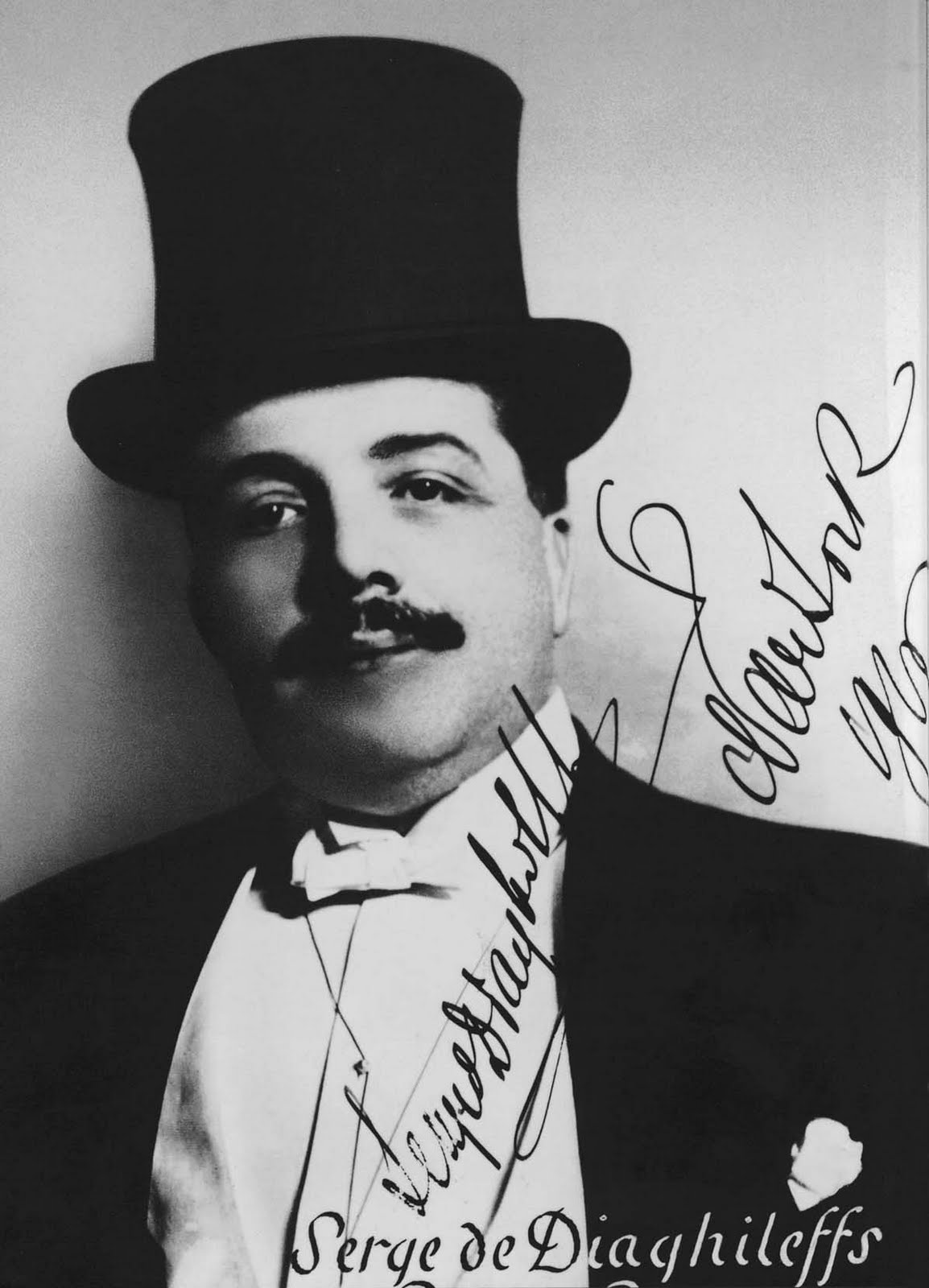
Diaghilev and the Golden Age of the Ballet Russes, V&A. Opens 25 September 2010

For Henri Matisse Sergey Diaghilev was Louis XIV, while Claude Debussy described him as '.. that terrible and charming man, who could make stones dance.'

Sergei Diaghilev was also described as a devil, a provocateur and a thief, but a hundred years on from the first glittering explosion of the Ballet Russes onto the Paris stage, we surely can only conclude the man was a bullish persuader with a nose for excellence all wrapped up with a phenomenal work ethic.

Sergey Diaghilev cajoled, lured, bullied, flattered and extorted the greatest names in modern art, including Stravinsky, Matisse, Picasso, Nijinsky, Chanel and Balanchine - urging them to collaborate on the most breathtakingly new theatrical productions the world had ever seen. It's a heritage that kick started the collaborative arts and establishmed modern ballet companies that seem such a permanent part of our cultural landscape now.

Of course, his only tangible legacy are the delicately faded costumes, properties and sets at, 'Diaghilev and the Golden Age of the Ballets Russes 1909-1929' which is about to open as the glittering jewel in the V&A's autumn schedule.

The conceit of the exhibition is that we've stumbled back stage at a Ballets Russes performance. Walls are painted darkly, there are highlights and illuminations as if from a nearby stage. Music, particularly Stravinsky's Rite of Spring, seems to lure us deeper into the exotic gloom. This concept works well for Diaghilev was averse to his productions being filmed, there is barely any footage. We are only left with eye witness reports, ballet notation of the choreography and the properties themselves. The exhibition's corners are taken up with ladders, suitcases and boxes - the jumbled detritus of a touring dance company.

And, boy, did the Ballet Russes tour! The US, Europe and Latin America were all regularly blessed with the company's presence, but sadly never Russia itself due to Diaghilev's own complex feelings towards his homeland and the 1917 revolution that put paid to any further thoughts of his triumphal return. Revenue from touring just kept the company's expensive calvalcade afloat. Although Diaghilev was constantly on the run from an ever growing army of creditors.

It was that cultural bomb of Russia's revolution which seemed to shift the company's aesthetic away from the post-belle epoque exoticism of ballets like Sheherazade, The Rite of Spring and The Firebird towards a cooler, pared down modernism found in works of the 1920s like Le Train Blue, Chout and Apollon whose simple grecian tunics were designed by Coco Chanel typifying the androgynous mood of the Jazz Age.

Perhaps the most vivid quote about Sergey Diaghilev comes from Jean Cocteau, another of his many collaborators, 'That ogre, that sacred monster... that Russian prince to whom life was tolerable only to the extent to which he could summon up marvels.'

And what marvels they were. Do whatever you can to see them before they fade from sight forever.