Tuesday, 2 November 2010
Two operas and a dance off - Gluck, Monteverdi and Pina Bausch 28/29th October 2010

Tuesday, 19 October 2010
Psychoanalysis exhibition Science Museum 15/10/10
This small exhibition is set aside from the main drag of the Science Museum as if acknowledging the shaky idea that psychoanalysis is science. Freud urged it to be regarded as such. But psychoanalysis' status as hard science has always remained questionable. There are no courses in it at London's premier science school, Imperial College, for example.
According to the notes (and there are plenty of these throughout this exhibition) latest research in cognitive neuroscience is uncovering a body of evidence for unconscious mental activity. Ah ha, it is a science then!
Yet this is no proof of the unconscious as conceived by Freud. For him, the unconscious is a dung heap of repression and suppression where all our unmanageable feelings and fantasies fester. Neuroscience has yet to find this odure of the mind.
The closest to any kind of heap in the exhibition is the Noble and Webster sculpture – a tsunami of red cocks, balls and hands (molds from their own bodies) which are lit to cast a shadow on the wall behind of the artists' silhouettes. It’s a modern take of that profile cartoon of Freud with his nose and forehead made up of the outstretched torso of a naked women.
What is frustrating about this exhibition apart from being assailed by recorded voices of analysts explaining their work and plaques with overly long explanations of analytic techniques was the exhibition's sense of defensiveness. It seemed to be saying, rather with it's back to the wall, we really do belong in the august surroundings of the Science Museum. It feels vaguely muted and slightly muddled like a tormented soul stepping over the threshold for her first analytic session and unsure where to sit.
There's also a problem of voice - the explanations were both too esoteric - caught up in the highly specialist jargon of analysis - yet also too trite. The glass case with everyday objects - shoes, toy sports cars etc. that might unconsciously conjure for ourselves fantasies of status, youth, sexiness etc are today Sunday supplement cliches. We know this stuff already.
Also, anaysis is less a theory of mind than an active practice of healing. There were no patients in the exhibition apart from the drawings by one of Melanie Klein's child patients - his drawings of his father as Hitler were inevitably richly revealing. Though the photos of different analysts' empty therapy rooms merely showed that analysts have the same bad taste in interiors as the rest of us.
And yet, to see Freud's own copy of The Interpretation of Dreams (English trans 1913) - his greatest work - alongside his beloved objects from classical antiquity including the miniature Sphinx that was central to his theory of the Oedipus complex is thrilling. These very objects were the torches with which this creator of the talking cure shone a light into the darkest recesses of the human psyche. And we are still blinking in its intense illumination.
Monday, 11 October 2010
Soprano Soile Isokoski Wigmore Hall Monday 11th October
The revelation of today's lunchtime concert wasn't Isokoski's limpid rendering of Schumann's Liederkries (Op. 39), it was the four songs she sang by Henri Duparc. This is a composer I've never heard of before. He stopped composing music at 36 after a nervous illness made it impossible for him to continue. What a loss. He lived for another 40 years and Duparc would have been a name we know - as long as he'd carried on creating songs like these.Thursday, 7 October 2010
Through a Mirror, Darkly. Vertical Road, Akram Khan Co. Sadler's Wells 6th October 10

These are the three things I learnt from Vertical Road, Akram Khan's newest dance work that premiered a couple of months back and was seen in London for the first time last week -
Dusting crouching dancers in chalky dust or talc makes for a vivid opening tableau, when they start moving the dust flies off them like smoke (see picture).
Tai chi is compellingly inventive source material for dance.
Loud, repetitive drum beats become annoying after about three minutes.
Oh, and make this a fourth – either tell a story, or don’t. Opaque suggestions of narrative are frustrating – like a fuzzy screen that occasionally coalesces into a movie. Make it both and annoy the hell out of your audience.
Khan didn’t perform which was a shame as he - spellbindingly - is both feral and controlled like a leaping tiger. Although it was hardly making do to watch Salah el Brogy as his central male figure – in equal parts, yogi and Christ. And sex god.
Wednesday, 22 September 2010
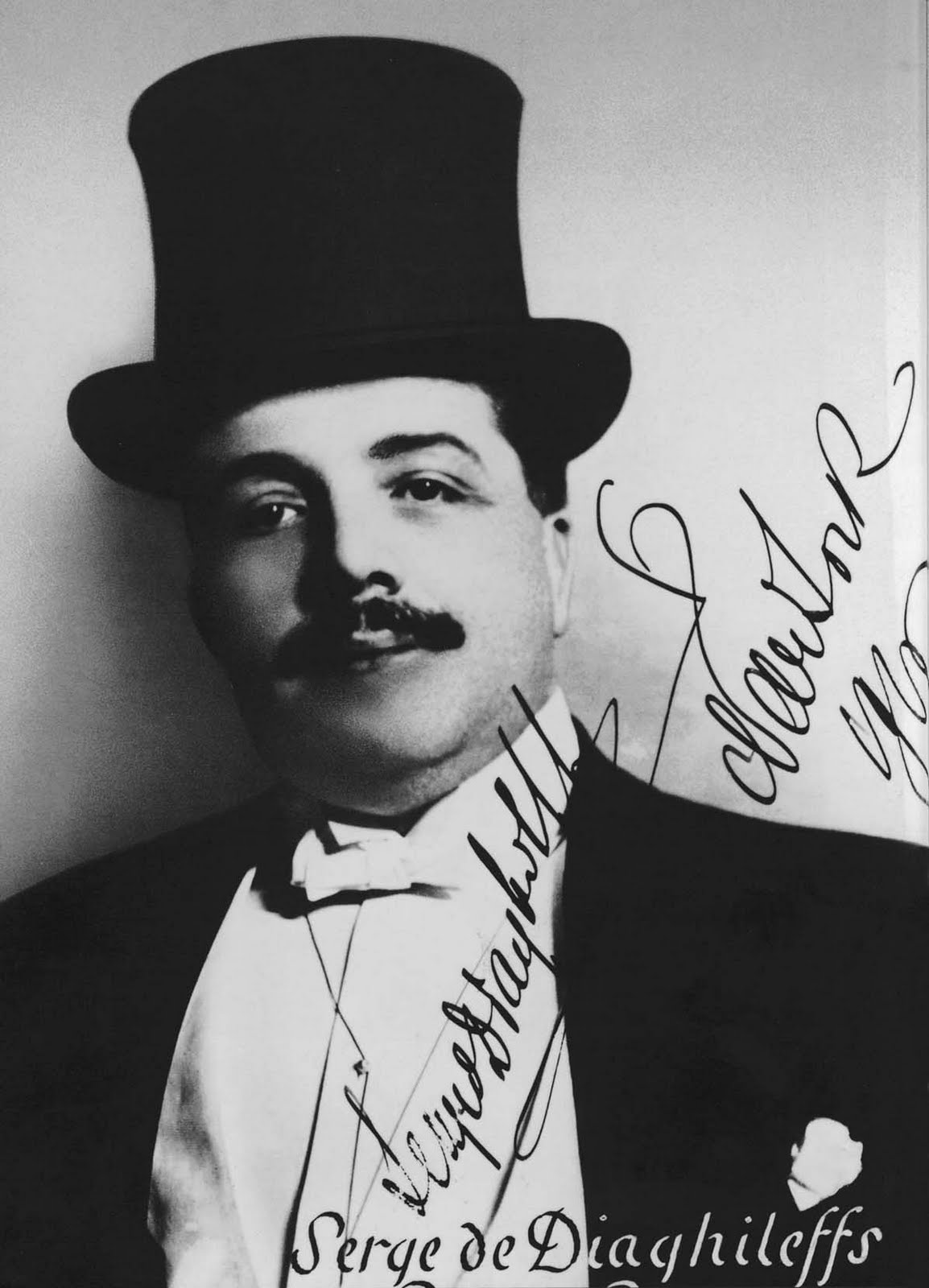
Diaghilev and the Golden Age of the Ballet Russes, V&A. Opens 25 September 2010
For Henri Matisse Sergey Diaghilev was Louis XIV, while Claude Debussy described him as '.. that terrible and charming man, who could make stones dance.' Wednesday, 8 September 2010
Fauning over the volume. l'Orchestre National de France, Prom 71, 7/9/10

Conducted by their (relatively) new music director, Daniele Gatti, l’Orchestre National de France were on stunning form (apart from an unseemly pile up by the brass section at the close of Dance of the Earth in Rite). Most distinctive perhaps was not the plangent sonorities of the fortissimi in La Mer and, of course, the Rite; but rather the exquisite, almost mystical, quietude that Gatti conjured from his 120-strong orchestra. It was this contrast, a kind of aural chiaroscuro between loud and soft, that gave these familiar pieces fresh mystery.
Perhaps it also comes from a particular kind of sensitivity of the predominantly French players to music that is such a part of their national culture? Sure, Stravinsky was Russian, yet what other piece of avant-garde music is more associated with Paris than this? There was that mythic riot in the Theatre Champs-Elysees at its premier on 29th May 1913.
Without these three works would 20th Century music have taken the adventurous course that it did? The breakdown in diatonic tonality towards dissonance and atonality, the shift from melody towards rhythm and the assertion of wind and brass over the violin’s orchestral dominance are all prefigured here.
But perhaps, more than any of this, these works taught us to listen with new ears.
Sunday, 22 August 2010
Not fiddling for change/Julia Fischer/Chamber Prom/16 August 2010

Julia Fischer’s violin playing is an exercise in effortlessness. As the 28 year old German lifts her 1742 Guardagnini to her chin, her left hand caresses the strings across the finger board up towards the instrument’s bridge as if to reassure herself that they are all in place and ready to sing.
Her eyes close and her chest lifts in a deep inhalation as her right arm controls her bow’s first downward trajectory – a sweeping gesture as if pushing an unwanted intruder away. With this movement we are immediately engulfed in her music making. Fischer and her instrument are one. And we, her audience begin to fly.
Fischer is a violinist’s violinist. Her playing shuns the showy pyrotechnics of Maxim Vengerov or Nigel Kennedy, though her technical virtuosity easily matches theirs. During her brief interview with Radio 3’s Catherine Bott between works at her recent lunchtime chamber Prom at Cadogan Hall (August 16th) her answer to how can she bring something new to a beloved warhorse like the Franck A Major sonata was, ‘I don’t like the pressure on performers to always bring something new. The Franck is great music and great music is always worth repeating. To bring something new is, I think, an unnecessary expectation.’
A modest yet perfectly sound response to our endless desire for novelty. Fischer is wise. Bott, and we the audience, humbly concurred.